Smart Cities Technology Guide
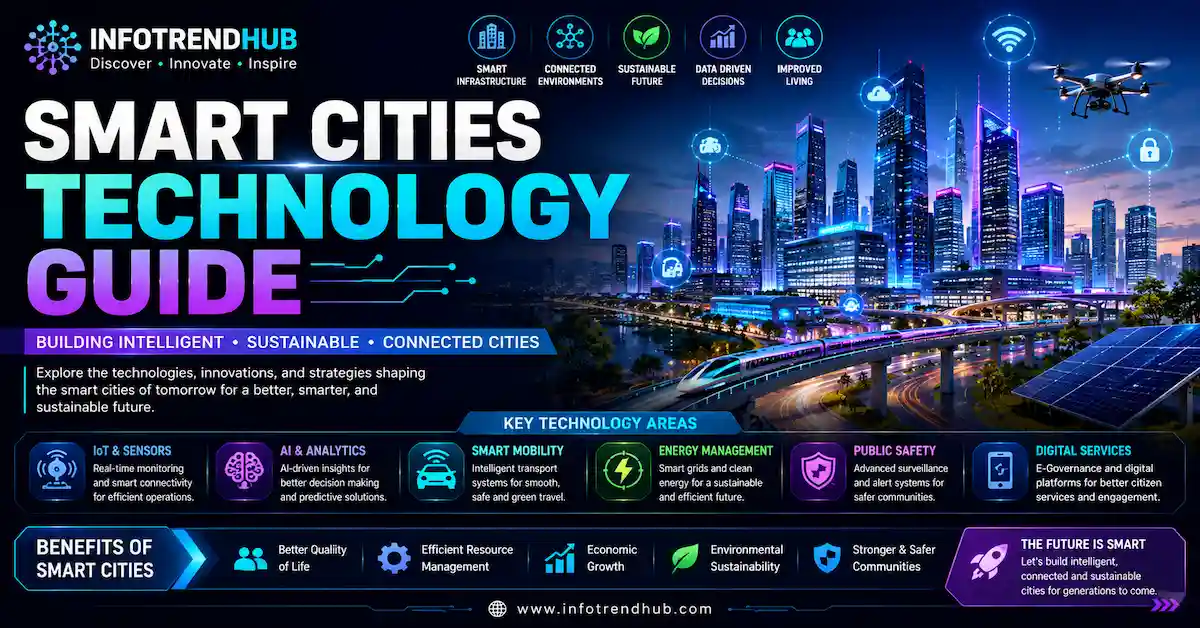
🏙️ Smart Cities Technology Guide
Innovation • Connectivity • Sustainability • Future Urban Development
🚀 Introduction to Smart Cities
Smart cities represent the future of urban development by combining advanced technology, digital infrastructure, and sustainable solutions to improve the quality of life for citizens. Modern cities are increasingly adopting connected systems that help manage transportation, energy, security, communication, and public services more efficiently.
The goal of smart city development is to create safer, cleaner, and more connected environments. By integrating intelligent technologies into everyday infrastructure, cities can improve resource management, reduce operational costs, and enhance public services.
🌐 Core Components of Smart Cities
📡 IoT Connectivity
Connected devices collect and share real-time information.
🤖 Artificial Intelligence
AI helps improve decision-making and automation.
🌱 Sustainable Energy
Smart energy systems improve efficiency and sustainability.
🚦 Smart Transportation
Intelligent transport systems reduce congestion.
📊 Smart City Technology Dashboard
| Technology | Main Purpose | Benefit |
|---|---|---|
| IoT Sensors | Data Collection | Real-Time Monitoring |
| Artificial Intelligence | Automation | Smarter Decisions |
| Smart Energy | Efficiency | Lower Consumption |
| Digital Services | Citizen Support | Better Accessibility |
| Smart Mobility | Transportation | Reduced Traffic |
🏆 Benefits of Smart Cities
- Improved quality of life.
- Efficient use of resources.
- Better transportation systems.
- Enhanced public safety.
- Reduced environmental impact.
- Stronger digital connectivity.
- Improved government services.
💡 Innovation Hub Insight
📈 Future Smart City Roadmap
- Expansion of connected infrastructure.
- Growth of AI-powered public services.
- Advanced transportation systems.
- Improved renewable energy adoption.
- Enhanced digital governance.
- Smarter environmental monitoring.
🌍 Smart Cities and Sustainability
Sustainability plays a major role in smart city development. Smart energy systems, green infrastructure, and intelligent resource management help reduce waste and support environmentally responsible growth.
❓ Frequently Asked Questions
What is a smart city?
A smart city uses technology and connected systems to improve urban services, efficiency, and quality of life.
Why are smart cities important?
They help improve transportation, sustainability, public services, and overall urban management.
Which technologies power smart cities?
Artificial Intelligence, IoT, cloud computing, smart energy systems, and digital services.
🏅 Final Conclusion
Smart Cities Technology Guide highlights how innovation and digital transformation are shaping the future of urban living. As technology continues advancing, smart cities will become more connected, sustainable, and efficient, creating better experiences for citizens and communities worldwide.
← Back to Blog