Mobile Gaming Apps Review Guide
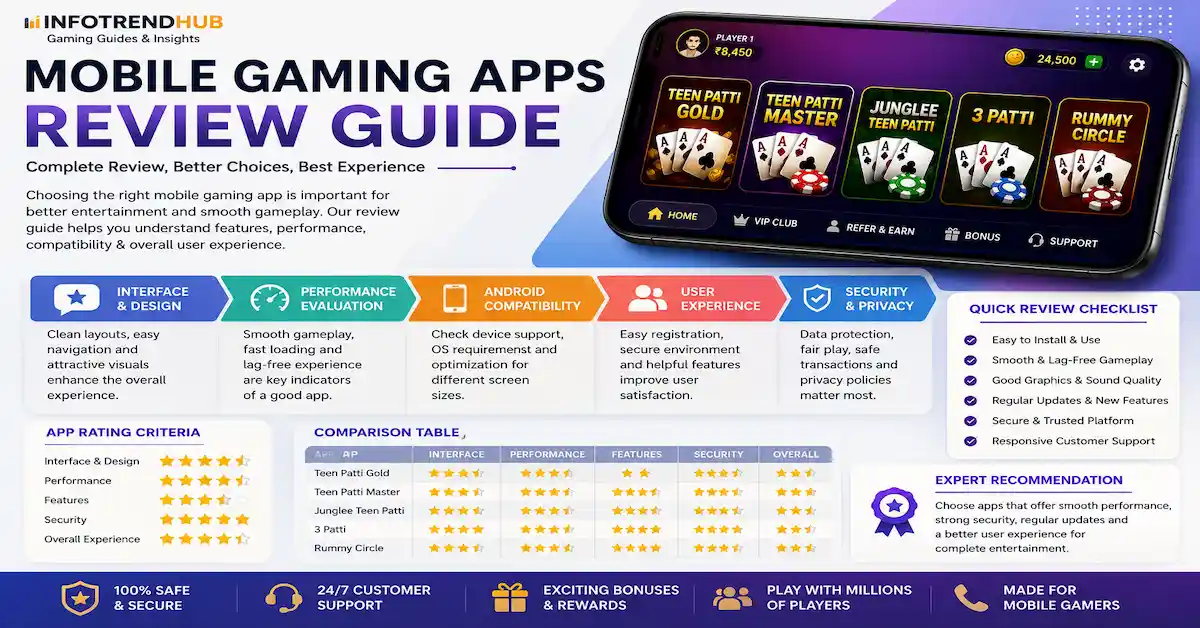
Mobile Gaming Apps Review Guide
📖 Introduction
Mobile gaming applications have become one of the fastest-growing categories in the digital entertainment industry. Modern smartphones provide users with access to a wide range of applications designed for convenience, accessibility, and enhanced user experiences. As Android technology continues to evolve, mobile gaming apps are becoming more optimized and feature-rich than ever before.
This review guide explores the key factors users should consider when evaluating mobile gaming applications, including interface quality, performance optimization, Android compatibility, and overall usability.
🔍 Quick Review Checklist
- Interface & Design Quality
- Performance Optimization
- Android Compatibility
- User Experience
- Security & Privacy
- Feature Availability
- Accessibility
🎨 Interface and Design Review
The visual appearance of an application significantly influences user satisfaction. Applications with organized layouts, clear menus, and responsive navigation systems are generally easier to use and understand.
Modern Android applications prioritize accessibility through structured interfaces that allow users to locate important features efficiently. Clean designs often improve usability while maintaining a professional appearance.
⚡ Performance Evaluation
Performance is one of the most important aspects of any mobile application. Applications that provide responsive controls and smooth transitions generally create a better overall experience.
Fast loading sections, optimized navigation systems, and efficient resource management help applications maintain consistency across different Android devices.
| Performance Factor | Importance |
|---|---|
| Loading Speed | Improved Accessibility |
| Navigation Response | Better Usability |
| Mobile Optimization | Smooth Experience |
| Layout Stability | Consistent Performance |
📱 Android Compatibility Analysis
Android devices vary significantly in terms of hardware specifications and screen sizes. Applications optimized for multiple devices generally provide a more consistent experience across different platforms.
Responsive layouts adapt to various resolutions while maintaining accessibility. Compatibility support helps ensure users can interact comfortably regardless of their device configuration.
👥 User Experience Review
User experience extends beyond visual design. Applications must provide intuitive navigation, organized content structures, and responsive functionality to create a positive interaction environment.
Applications that emphasize simplicity and accessibility often appeal to a wider range of Android users. Consistency throughout the interface also contributes to better usability.
🔒 Security and Privacy Considerations
Modern users pay close attention to privacy and security features. Applications that clearly communicate their policies and maintain transparent practices often create greater user confidence.
Security considerations should be reviewed carefully before installing or using any mobile application.
📊 Feature Comparison Overview
| Feature | Benefit |
|---|---|
| Responsive Design | Better Accessibility |
| Android Support | Wide Compatibility |
| User Friendly Interface | Easy Navigation |
| Performance Focus | Improved Experience |
| Mobile Optimization | Smooth Functionality |
🌟 Benefits of Well-Designed Mobile Applications
- Improved Accessibility
- Better User Experience
- Mobile Convenience
- Responsive Navigation
- Android Compatibility
- Efficient Layout Structure
- Organized Features
- Flexible Usage
💡 Expert Recommendations
When reviewing mobile applications, users should consider interface quality, compatibility support, navigation efficiency, and overall usability. Comparing multiple factors provides a broader understanding of application quality.
- Review compatibility requirements.
- Check available features carefully.
- Evaluate navigation quality.
- Understand privacy information.
- Maintain updated Android software.
- Use trusted download sources.
❓ Frequently Asked Questions
What should users review before installing an app?
Compatibility information, interface quality, and feature availability are commonly reviewed factors.
Why is Android compatibility important?
Compatibility ensures applications function consistently across different devices and screen sizes.
What contributes to a better user experience?
Organized navigation, responsive controls, and accessible layouts improve usability.
🏁 Final Review Summary
Mobile gaming applications continue to evolve through improvements in design, compatibility, and performance optimization. Applications that focus on usability, accessibility, and responsive navigation generally provide a better overall experience for Android users.
← Back to Blog